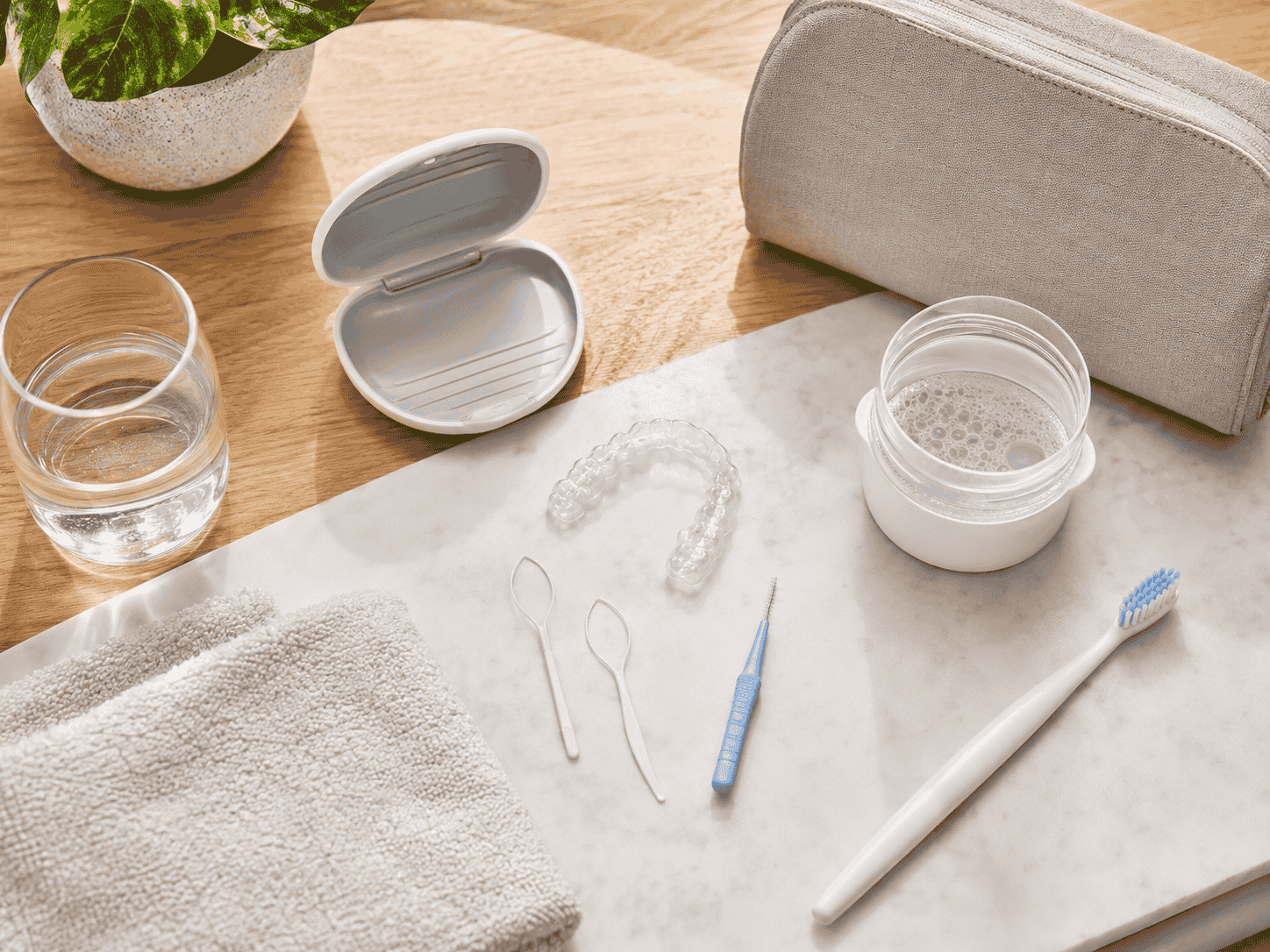
Clear braces use ceramic brackets bonded to your teeth, while clear aligners are removable custom trays worn 20+ hours per day. Both options effectively straighten teeth, but the right choice depends on your case complexity, lifestyle habits, and personal preferences. A free consultation at Scaffidi Orthodontics can help determine which treatment fits your smile goals.
Choosing between clear braces and clear aligners is one of the most common questions we hear at Scaffidi Orthodontics. Both options offer a discreet path to a straighter smile, and both can deliver excellent results. But they work differently, fit different lifestyles, and suit different orthodontic needs.
If you’ve been weighing your options and aren’t sure where to start, this post breaks down exactly how each treatment works, what to expect in terms of cost and timeline, and which option is likely the better fit for you.
Key Takeaways
- Clear braces use fixed ceramic brackets and wires bonded to your teeth; clear aligners are removable custom trays
- Clear aligners require consistent wear of at least 20 hours per day to be effective
- Clear braces are generally better suited for more complex orthodontic cases
- Both treatments are comparable in cost, and flexible payment plans are available at our Slidell, New Orleans, and Kenner offices
- A free consultation with Dr. Scaffidi is the best way to determine which option is right for your specific needs

How Do Clear Braces Work?
Clear braces, also called ceramic braces or tooth-colored braces, function the same way traditional metal braces do. The difference is in the materials. Instead of metal brackets, clear braces use small tooth-colored polycrystalline ceramic brackets that blend naturally with your smile. A wire runs through each bracket, and Dr. Scaffidi adjusts that wire every four to six weeks to gradually guide your teeth into alignment.
Because they’re fixed to your teeth throughout treatment, clear braces apply continuous pressure without requiring any action on your part between appointments. That consistency is one of their biggest advantages, particularly for patients with more complex orthodontic cases. At our orthodontics office, we see patients choose clear braces specifically because they want reliable results without having to manage a removable appliance.
One consideration worth knowing: ceramic brackets are slightly more fragile than metal and can be sensitive to certain foods. Avoiding hard or sticky foods during treatment will help protect your brackets and keep your treatment on track.
How Do Clear Aligners Work?
Clear aligners use a series of custom-made, removable trays that gradually shift your teeth into position. At Scaffidi Orthodontics, we create your first set of aligners from photos and X-rays that build a precise 3D image of your mouth. You’ll typically move through 18 to 30 sets of trays over the course of treatment, switching to a new set approximately every one to two weeks.
The key to clear aligner success is wear time. Aligners must be worn for at least 20 hours per day to do their job. They come out for eating, drinking anything other than water, and brushing, but they need to go right back in after. Patients who are consistent with their wear time tend to see results right on schedule. Those who aren’t can add weeks or months to their treatment timeline.
Clear aligners work best for mild to moderate crowding, spacing issues, and certain bite corrections. For certain complex cases, or for patients with bridgework, they may not be the right fit. If you’re curious about eligibility, the best next step is to schedule a free consultation so we can evaluate your specific situation.
Learn more about clear aligners in Slidell and what to expect from the process.
How Long Does Treatment Take with Each Option?
Treatment timelines vary based on the complexity of your case, but here are general ranges to plan around. Clear braces typically take 18 to 36 months, while clear aligner treatment at our office generally ranges from 9 to 15 months for most patients. More complex corrections with either option can push toward the longer end of those ranges.
One factor that affects clear aligner timelines more than braces timelines is patient compliance. Clear braces work continuously because they’re fixed, while clear aligners rely on the patient wearing them as directed. If aligners are frequently left out for more than the recommended 4 hours per day, treatment slows. Both options require you to wear a retainer after treatment is complete to maintain your results long-term.
What Does Each Option Cost?
Clear braces and clear aligners are comparable in overall cost. According to industry data from 2025, ceramic braces typically range from $4,000 to $7,000, while clear aligner treatment generally falls between $3,000 and $8,000 depending on case complexity and treatment length. The final cost at our practice will depend on your specific orthodontic needs, which Dr. Scaffidi assesses at your initial consultation.
We work with most major insurance plans and will verify your orthodontic benefits before you commit to anything. Most dental insurance plans that include orthodontic coverage pay up to 50% of treatment costs, typically up to a lifetime maximum of $1,500 to $3,000. Whatever your coverage looks like, we also offer flexible monthly payment plans and automatic bank drafts to help make treatment fit your family’s budget. There are no hidden fees at any of our three locations, including our Slidell office.
How Does Each Option Fit Into Your Daily Life?
This is often the deciding factor for patients who are clinically eligible for both treatments. Clear braces stay in place around the clock, which means fewer daily decisions and no risk of forgetting to put them back in. You’ll need to avoid certain hard and sticky foods and spend a little extra time cleaning around your brackets and wires, but otherwise, daily life continues as normal.
Clear aligners offer more flexibility. You can remove them for meals, brush and floss without working around hardware, and take them out for photos or special occasions. Athletes and musicians, in particular, often prefer aligners because they can remove them during contact sports or performances. The trade-off is discipline. Patients who tend to take aligners out more than recommended or lose them frequently may find that clear braces serve them better in the long run.
Which Option Is the Right Fit for You?
Choosing between clear braces and clear aligners comes down to three things: the complexity of your case, your lifestyle and compliance habits, and your personal priorities around aesthetics and convenience.
Clear braces are typically the better fit if you have significant crowding, bite irregularities, or complex tooth movements that require more precise control. They’re also a strong choice for patients who would rather not manage a removable appliance. Clear aligners are a great option for mild to moderate cases and for patients who prioritize discretion and the freedom to eat without restrictions. The American Association of Orthodontists recommends consulting with a board-eligible orthodontist before choosing a treatment, since the right choice depends heavily on your unique dental anatomy and goals.
Dr. Scaffidi will review your X-rays, photos, and bite analysis at your free consultation and walk you through which options are appropriate for your specific case. There’s no obligation, and you can even start treatment the same day if you’re ready.

Frequently Asked Questions
Q: How long do clear braces take compared to clear aligners?
A: Clear braces typically take 18 to 36 months, while clear aligner treatment at Scaffidi Orthodontics generally ranges from 9 to 15 months. Your actual timeline depends on the complexity of your case and how consistently you follow the treatment plan.
Q: Can I eat normally with clear aligners like I can with clear braces?
A: Clear aligners must be removed before eating, so there are no food restrictions while you’re wearing them. With clear braces, you’ll need to avoid hard, sticky, or crunchy foods throughout treatment to protect the ceramic brackets.
Q: Which option is more affordable, clear braces or clear aligners?
A: The two options are comparable in overall cost. Treatment fees vary based on case complexity, but we offer flexible payment plans at all three locations, including our Slidell office, to make orthodontic care accessible for your family.
Q: Do clear aligners work as well as clear braces?
A: Both options deliver excellent results when used correctly. Clear aligners are most effective for mild to moderate cases, while clear braces can handle a wider range of complex orthodontic needs. Compliance with aligner wear time is the biggest factor in how well clear aligners perform.
Q: How often will I need to visit the office with each treatment?
A: Clear braces require adjustment appointments every four to six weeks. Clear aligner patients typically come in every four to eight weeks for progress checks, though the frequency can vary depending on your treatment plan.
Start Your Smile at Scaffidi Orthodontics
Both clear braces and clear aligners are proven paths to a healthier, more confident smile. The best choice depends on your specific orthodontic needs, your daily habits, and what matters most to you throughout treatment. There’s no single right answer, and that’s exactly why a personalized consultation is worth your time.
At Scaffidi Orthodontics, Dr. Scaffidi takes the time to understand your goals and explain every option clearly before recommending a plan. We serve patients across New Orleans, Kenner, and Slidell, and we offer free consultations with same-day treatment starts if you’re ready to move forward. Schedule your free consultation today and take the first step toward the smile you’ve been thinking about.